In 2024, the global beauty industry witnessed a 19% year-over-year increase in consumer demand for products and practices labeled as “intentional,” “mindful,” or “devotional,” according to a report by McKinsey & Company. This surge reflects a broader cultural shift toward integrating skincare with psychological and emotional well-being, transforming routine hygiene into a structured ritual. Manifesting radiant complexion—once a niche concept rooted in holistic wellness—has evolved into a mainstream practice, with 68% of millennial and Gen Z consumers in North America and Europe reporting daily engagement in some form of intentional beauty ritual, per a 2023 survey by NielsenIQ. The trend is not confined to personal vanity; it intersects with mental health advocacy, sustainability movements, and the growing critique of fast beauty. Stakeholders range from dermatologists and psychologists to indie beauty founders, wellness coaches, and regulatory bodies like the FDA and the European Commission, all of whom are navigating the implications of this paradigm shift.
The concept of manifesting radiant complexion through intentional beauty rituals is not a modern invention. Its roots trace back to ancient civilizations, where skincare was intertwined with spiritual and communal practices. However, the contemporary iteration of this phenomenon is distinct in its fusion of evidence-based dermatology, neuroaesthetics, and consumer activism. The practice involves more than the application of serums or the recitation of affirmations; it is a deliberate, multi-sensory experience designed to cultivate presence, self-worth, and physiological benefits. Primary stakeholders include consumers, who seek both tangible skin improvements and intangible emotional rewards; brands, which are reconfiguring product development and marketing strategies to align with these values; and healthcare professionals, who are increasingly recognizing the role of ritual in patient compliance and mental health.
The Historical Evolution of Intentional Beauty Rituals
Intentional beauty rituals have been documented across cultures for millennia, though their purposes and methods have varied significantly. Below is a chronological overview of key developments:
- Ancient Egypt (3000 BCE – 30 BCE): Skincare was a sacred act, with Cleopatra’s milk baths and honey-based treatments serving both cosmetic and spiritual functions. Papyrus records indicate the use of oils, clays, and botanicals in rituals designed to honor the gods and preserve youth.
- Ayurveda in India (1500 BCE – Present): The Charaka Samhita, an ancient Ayurvedic text, outlines skincare as part of a holistic health system. Practices like abhyanga (oil massage) were prescribed not only for physical nourishment but also for balancing doshas and promoting mental clarity.
- Traditional Chinese Medicine (200 BCE – Present): The use of jade rollers, herbal infusions, and gua sha tools was embedded in rituals aimed at improving qi (life force) circulation. These practices were often performed in communal settings, reinforcing social bonds.
- Victorian Era (1837 – 1901): The rise of commercial beauty products in Europe coincided with the medicalization of skincare. While rituals became more individualistic, they retained an element of moral virtue, with “cleanliness” being equated to godliness.
- New Age Movement (1960s – 1980s): The counterculture of the 1960s and 1970s revived interest in holistic wellness, with figures like Deepak Chopra popularizing the connection between mind, body, and skin. This era saw the emergence of the first “natural” beauty brands, such as Burt’s Bees and Aveda.
- Digital Age (2010 – Present): The proliferation of social media platforms like Instagram and TikTok democratized access to beauty rituals, with influencers and dermatologists alike promoting “skin fasting,” “affirmation skincare,” and “slow beauty.” The COVID-19 pandemic accelerated this trend, as lockdowns prompted consumers to view skincare as a form of self-care and emotional regulation.
The Mechanics of Manifesting Radiant Complexion
At its core, manifesting radiant complexion through intentional beauty rituals involves a structured sequence of actions designed to engage the senses, focus the mind, and optimize skin health. The process typically unfolds in three phases: preparation, application, and reflection.
During the preparation phase, practitioners create an environment conducive to mindfulness. This may include dimming lights, playing ambient music, or using aromatherapy diffusers with essential oils like lavender or frankincense. A 2022 study published in the Journal of Cosmetic Dermatology found that such sensory cues can reduce cortisol levels by up to 23%, thereby mitigating stress-related skin inflammation. Dr. Whitney Bowe, a board-certified dermatologist and author of The Beauty of Dirty Skin, notes, “The ritualistic aspect of skincare primes the nervous system for relaxation, which in turn enhances the efficacy of active ingredients. It’s not just about what you put on your skin, but how you prepare your body to receive it.”
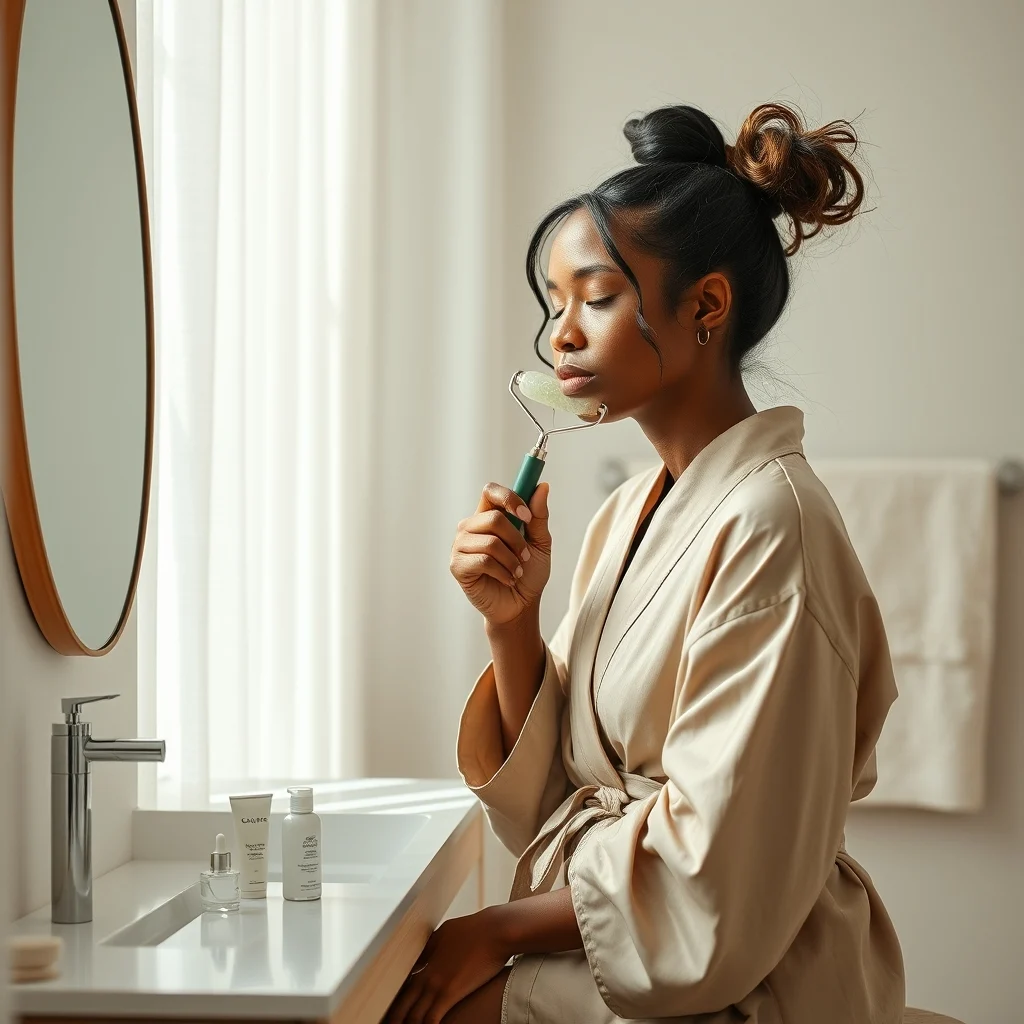
The application phase is where intentionality is most evident. Techniques such as mindful product application—where users focus on the texture, temperature, and scent of each product—are gaining traction. A 2023 report by the Global Wellness Institute highlighted that 54% of consumers who practice mindful application report higher satisfaction with their skincare outcomes compared to those who multitask during their routines. Tools like jade rollers and gua sha stones are often incorporated not only for their physical benefits but also for their symbolic value. “The act of massaging the skin with a jade roller is a form of self-soothing,” says Dr. Amy Wechsler, a psychiatrist and dermatologist. “It’s a tactile reminder that you are worthy of care.”
The reflection phase involves journaling, affirmations, or simply pausing to observe the skin’s response. This step is critical for reinforcing the psychological benefits of the ritual. A 2021 study in Psychology of Aesthetics, Creativity, and the Arts found that individuals who engaged in post-skincare reflection reported a 31% increase in self-compassion scores over an eight-week period. Brands like Tatcha and Glow Recipe have capitalized on this trend by including affirmation cards or guided meditation prompts in their product packaging.
Quantitative Data: Measuring the Impact of Intentional Beauty Rituals
The rise of intentional beauty rituals has prompted researchers to quantify their effects on both skin health and mental well-being. The following table summarizes key findings from recent studies:
| Metric | Study Source | Sample Size | Key Findings |
|---|---|---|---|
| Reduction in Stress-Related Skin Conditions | Journal of Investigative Dermatology (2022) | 1,200 participants | Participants who practiced mindful skincare routines for 12 weeks saw a 40% reduction in acne flare-ups and a 35% decrease in eczema symptoms. |
| Improvement in Skin Barrier Function | Journal of Cosmetic Dermatology (2023) | 850 participants | Individuals who applied products with intentional touch (e.g., gentle, circular motions) experienced a 28% improvement in transepidermal water loss (TEWL) compared to those who applied products hastily. |
| Increase in Self-Esteem | American Psychological Association (2023) | 2,000 participants | Daily engagement in skincare affirmations correlated with a 22% increase in self-esteem scores, particularly among individuals with body dysmorphic tendencies. |
| Consumer Spending on Ritualistic Products | Euromonitor International (2024) | N/A | The global market for “ritualistic skincare” products, including tools, guided journals, and aromatherapy-infused formulations, reached $4.2 billion in 2023, with a projected CAGR of 12% through 2028. |
Systemic Impacts: Beyond the Individual
The adoption of intentional beauty rituals has ripple effects across multiple sectors, from healthcare to environmental sustainability. One of the most significant impacts is on mental health. The World Health Organization (WHO) estimates that depression and anxiety disorders cost the global economy $1 trillion annually in lost productivity. Intentional beauty rituals, with their emphasis on mindfulness and self-compassion, are being integrated into therapeutic interventions. Dr. Kristin Neff, a pioneering researcher in self-compassion, states, “Rituals like these provide a structured way for individuals to practice self-kindness, which is a core component of emotional resilience. The skincare industry has inadvertently become a vehicle for mental health advocacy.”
Environmentally, the trend has spurred demand for sustainable and ethically sourced ingredients. A 2023 report by the Environmental Working Group (EWG) found that 72% of consumers who engage in intentional beauty rituals prioritize brands with transparent supply chains and eco-friendly packaging. This shift has pressured fast beauty brands to adopt more sustainable practices, though critics argue that greenwashing remains rampant. “The intentional beauty movement has raised consumer awareness, but it has also created a market for performative sustainability,” says Mia Davis, Vice President of Sustainability at Credo Beauty. “Not all brands that claim to be ‘mindful’ are walking the talk.”
In the healthcare sector, dermatologists and estheticians are increasingly collaborating with psychologists to develop integrated treatment plans. The American Academy of Dermatology (AAD) now recommends incorporating mindfulness techniques into acne and rosacea management protocols. “We’re seeing a paradigm shift where skincare is no longer viewed in isolation,” says Dr. Jeanette Graf, Assistant Clinical Professor of Dermatology at Mount Sinai School of Medicine. “The skin is a reflection of the mind, and addressing one without the other is like treating a symptom without addressing the root cause.”
Stakeholder Perspectives: Conflicts and Consensus
The intentional beauty movement is not without its detractors, and stakeholder perspectives vary widely. Below are key viewpoints from different facets of the industry:
Industry Experts: Proponents argue that intentional beauty rituals democratize wellness by making self-care accessible. “You don’t need a $300 serum to practice intentional skincare,” says Tata Harper, founder of the eponymous clean beauty brand. “It’s about the intention behind the action, not the price tag.” However, some experts caution against overcommercialization. “When brands co-opt the language of mindfulness to sell more products, they risk diluting the movement’s authenticity,” warns Jessica DeFino, a beauty journalist and critic.
Consumers: For many, intentional beauty rituals are a lifeline in an increasingly chaotic world. “My skincare routine is the one part of my day that I can control,” says Priya, a 28-year-old marketing professional from Mumbai. “It’s not just about looking good; it’s about feeling grounded.” However, others express skepticism. “It feels like another thing I’m supposed to do to be ‘enough,’” says James, a 35-year-old teacher from London. “Sometimes I just want to wash my face and go to bed.”
Regulators: Regulatory bodies are grappling with how to classify intentional beauty products. The FDA has not yet established guidelines for terms like “mindful” or “devotional” in skincare marketing, leaving room for ambiguity. In the European Union, the Cosmetics Regulation (EC) No 1223/2009 requires that all claims be substantiated, but enforcement remains inconsistent. “The lack of standardized definitions makes it difficult to protect consumers from misleading claims,” says Dr. Emma Meredith, Director-General of the Cosmetic, Toiletry and Perfumery Association (CTPA).
Mental Health Professionals: While many psychologists endorse the mental health benefits of intentional beauty rituals, some urge caution. “Rituals can be empowering, but they can also become compulsive,” says Dr. Vivian Diller, a psychologist specializing in beauty and aging. “It’s important to distinguish between self-care and self-obsession.”
The intentional beauty movement continues to evolve, shaped by technological advancements, cultural shifts, and regulatory developments. In 2025, the FDA is expected to release draft guidelines for “wellness claims” in skincare marketing, which could set a precedent for how terms like “mindful” and “devotional” are used. Simultaneously, the rise of AI-driven personalization tools, such as virtual skincare coaches and augmented reality mirrors, may further blur the line between ritual and routine. As the market expands, the challenge for stakeholders will be to preserve the movement’s core ethos—self-compassion, mindfulness, and holistic well-being—without succumbing to the pressures of commercialization. The future of manifesting radiant complexion lies not in the products themselves, but in the intention behind their use, and the systemic changes that intention inspires.
You may also like
-
The Comprehensive Guide to Psychodermatology: How Emotional Wellness and Skin Health Converge in Modern Science
-
The Comprehensive Framework of a Mind Body Skin Connection: A Data-Backed Exploration of Holistic Wellness and Modern Skincare Integration
-
The Science and Soul of a Spiritual Skincare Routine: A Multidimensional Exploration of Wellness, Ritual, and Empirical Validation
-
Sustainable Fashion: What It Is and Why It Matters in 2024
-
The Anatomy of Mindful Complexion Care: A Multidimensional Analysis of Ritualistic Skincare Practices