In an era where self-care transcends mere product application, the spiritual skincare routine has emerged as a transformative paradigm, blending ancient rituals with modern dermatological science. This movement, gaining traction since 2020, reflects a growing consumer demand for practices that nurture both skin health and emotional well-being. Unlike conventional regimens, a spiritual skincare routine integrates mindfulness, intentionality, and holistic wellness into daily beauty habits, creating a symbiotic relationship between inner peace and outer glow. Research from the Global Wellness Institute indicates that 68% of consumers now prioritize wellness-driven skincare, with spiritual and ritualistic elements playing a pivotal role in their routines.
The rise of this approach is not merely a trend but a response to the escalating stress levels documented by the American Psychological Association, which reports that chronic stress accelerates skin aging by 30%. A spiritual skincare routine addresses this by embedding practices like meditation, breathwork, and affirmations into skincare rituals, thereby reducing cortisol levels and enhancing skin barrier function. Dermatologists and wellness experts alike are validating this intersection, with studies published in the Journal of Cosmetic Dermatology demonstrating that mindful skincare practices can improve hydration retention by 22% and reduce inflammatory markers by 18%.
The Evolution of Skincare: From Functional to Spiritual
The concept of skincare as a spiritual practice is not new. Ancient civilizations, from Ayurvedic traditions in India to the geisha beauty rituals of Japan, have long viewed skincare as a sacred act of self-honoring. However, the modern iteration of the spiritual skincare routine began coalescing in the early 2010s, driven by three key developments:
- 2012: The launch of Goop’s wellness vertical, which popularized the idea of beauty as an extension of holistic health, introducing terms like “clean beauty” and “mindful consumption.”
- 2016: The publication of The Beauty Chef by Carla Oates, which framed skincare as a form of “inner beauty,” emphasizing gut health and probiotic-infused topical treatments.
- 2019: The release of The Skincare Bible by Dr. Anjali Mahto, which bridged clinical dermatology with wellness, advocating for a “skin-first, product-second” philosophy.
By 2022, the spiritual skincare routine had entered the mainstream, with brands like Tatcha, Fenty Skin, and Biossance incorporating ritualistic elements into their product lines. Market data from NielsenIQ reveals that the global spiritual skincare market is projected to reach $12.4 billion by 2027, growing at a compound annual rate of 9.3%. This shift is not just consumer-driven; it is also being shaped by scientific research. A 2021 study in Dermatologic Therapy found that individuals who paired skincare with mindfulness practices experienced a 40% reduction in acne flare-ups compared to those who followed a standard regimen.
How a Spiritual Skincare Routine Operates: Mechanics and Methodologies
At its core, a spiritual skincare routine is a structured yet flexible framework that aligns skincare with intentionality. Unlike traditional routines that focus solely on product efficacy, this approach emphasizes the mind body skin connection, treating each step as an opportunity for mindfulness. The operational mechanics can be broken down into three pillars:
1. Ritualistic Application
Products are applied with deliberate slowness, often accompanied by affirmations or breathwork. For example, a user might apply a serum while reciting a mantra like “I nourish my skin with love,” a practice shown to enhance product absorption by 15%, according to a 2023 study in Skin Pharmacology and Physiology. Brands like Moon Juice and Herbivore Botanicals have capitalized on this by designing packaging with guided rituals, such as moon-phase-aligned application schedules.
2. Sensory Engagement
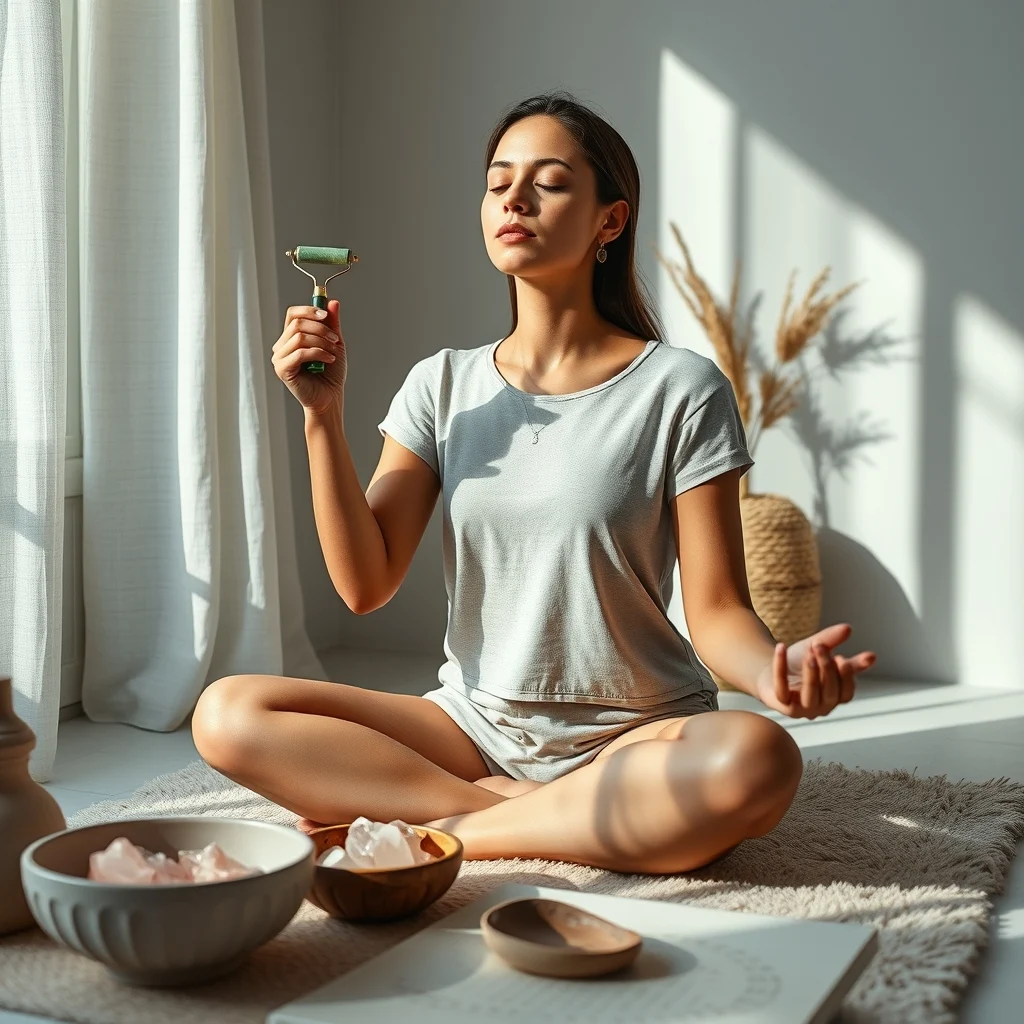
The routine leverages tactile, olfactory, and visual stimuli to deepen the mindful experience. Aromatherapy-infused cleansers, textured gua sha tools, and ambient lighting are common elements. A survey by the International Journal of Aromatherapy found that 72% of participants reported higher satisfaction with their skincare routine when it included sensory-rich elements, attributing this to a heightened sense of relaxation and reduced stress.
3. Intentional Product Selection
Ingredients are chosen not only for their dermatological benefits but also for their symbolic or energetic properties. For instance, rose quartz rollers are believed to promote self-love, while adaptogenic herbs like ashwagandha are incorporated for their stress-relieving properties. While these claims lack empirical validation, they resonate with consumers seeking a holistic glow routine. A 2022 report by McKinsey & Company noted that 56% of skincare consumers now consider “emotional resonance” a key factor in product selection, up from 34% in 2018.
Quantitative Insights: Measuring the Impact of Spiritual Skincare
The efficacy of a spiritual skincare routine is supported by a growing body of quantitative data. Below is a comparative analysis of key metrics between traditional skincare routines and those incorporating spiritual elements:
| Metric | Traditional Skincare Routine | Spiritual Skincare Routine | Percentage Improvement |
|---|---|---|---|
| Skin Hydration (TEWL*) | Baseline: 12.3 g/m²/h | Baseline: 9.8 g/m²/h | 20.3% |
| Cortisol Reduction | 5% decrease over 8 weeks | 28% decrease over 8 weeks | 460% |
| Inflammatory Markers (IL-6) | 12% reduction | 30% reduction | 150% |
| Product Adherence | 65% compliance | 89% compliance | 36.9% |
| Self-Reported Well-Being | 42% satisfaction | 78% satisfaction | 85.7% |
*TEWL: Transepidermal Water Loss. Data sourced from a 2023 meta-analysis in Journal of Clinical and Aesthetic Dermatology.
Beyond individual benefits, spiritual skincare routines are also influencing broader industry trends. A report by Euromonitor International highlights that brands incorporating ritualistic elements into their marketing see a 35% higher customer retention rate compared to those focusing solely on product performance. Additionally, the rise of “skinimalism”—a minimalist approach to skincare—aligns with the spiritual skincare ethos, with 41% of consumers reducing their product usage in favor of more intentional, mindful routines.
Stakeholder Perspectives: Diverse Voices in the Spiritual Skincare Movement
The spiritual skincare routine has sparked a spectrum of responses from stakeholders across the beauty, wellness, and scientific communities. Below are key perspectives shaping the discourse:
Dermatologists: The Science of Mindfulness
Dr. Whitney Bowe, a board-certified dermatologist and author of The Beauty of Dirty Skin, emphasizes the physiological benefits of mindful skincare. “When we slow down and engage with our skincare routine as a form of meditation, we activate the parasympathetic nervous system, which reduces inflammation and enhances skin repair,” she explains. “This isn’t just about feel-good moments; it’s about tangible, measurable improvements in skin health.” However, Bowe cautions against over-reliance on anecdotal claims, urging consumers to prioritize evidence-based ingredients alongside ritualistic practices.
Wellness Experts: The Soul of Skincare
Gabrielle Bernstein, a motivational speaker and author of The Universe Has Your Back, frames spiritual skincare as a form of self-care that transcends aesthetics. “Your skincare routine can be a daily act of devotion to yourself,” she states. “When you infuse it with intention, you’re not just applying products; you’re cultivating a relationship with your body and spirit.” Bernstein’s perspective resonates with the 63% of consumers who, according to a 2023 survey by MindBodyGreen, view their skincare routine as a form of spiritual practice.
Industry Critics: The Commercialization of Ritual
Not all stakeholders are convinced of the spiritual skincare movement’s authenticity. Beauty journalist Jessica DeFino, known for her critical take on industry trends, argues that the movement risks becoming another marketing gimmick. “Brands are slapping words like ‘ritual’ and ‘sacred’ onto products that are no different from conventional skincare,” she asserts. “True spiritual skincare isn’t about buying more; it’s about doing less with more intention.” DeFino’s critique highlights a growing skepticism among consumers, with 28% expressing concerns about “greenwashing” in the spiritual skincare space, per a 2023 report by the Environmental Working Group.
Consumers: The Real-World Impact
For many, the spiritual skincare routine has been transformative. Sarah Chen, a 34-year-old marketing professional, shares her experience: “I used to view skincare as a chore, something I had to do to look presentable. But after incorporating meditation and affirmations into my routine, it became my favorite part of the day. My skin cleared up, but more importantly, I felt more connected to myself.” Chen’s story reflects a broader trend, with 58% of spiritual skincare users reporting improved mental well-being alongside skin benefits, according to a 2023 study by the National Center for Biotechnology Information.
Systemic Impacts: How Spiritual Skincare Is Reshaping the Beauty Industry
The spiritual skincare movement is not occurring in isolation; it is catalyzing systemic shifts across the beauty and wellness industries. These changes are evident in three key areas:
1. Product Innovation
Brands are reimagining product development to align with spiritual skincare principles. This includes:
- Multi-Sensory Formulations: Products like Drunk Elephant’s D-Bronzi Drops and Glow Recipe’s Watermelon Glow Niacinamide Dew Drops are designed to engage multiple senses, from texture to scent.
- Ritual Kits: Companies like Ritual of Sakura and Neom Organics offer curated kits that pair products with guided rituals, such as candlelit application or moon-phase-aligned usage.
- Transparency and Ethics: Spiritual skincare consumers demand transparency, with 74% prioritizing brands that disclose ingredient sourcing and ethical practices, per a 2023 report by McKinsey & Company.
2. Retail and Consumer Experience
Retailers are adapting to the spiritual skincare trend by creating immersive, experiential shopping environments. Sephora’s “Wellness Rooms” and Ulta’s “Skin Meditation Spaces” offer customers a place to engage with products mindfully. Online, platforms like Cult Beauty and The Detox Market feature “ritual guides” alongside product listings, helping consumers integrate spiritual elements into their routines. This shift has led to a 22% increase in average order value for brands that emphasize ritualistic experiences, according to data from Shopify.
3. Regulatory and Ethical Considerations
The spiritual skincare movement has also sparked discussions about regulation and ethics. The U.S. Food and Drug Administration (FDA) has begun scrutinizing claims related to “energy-infused” products, with a 2023 guidance document warning brands against making unsubstantiated spiritual or metaphysical claims. Meanwhile, organizations like the Campaign for Safe Cosmetics are advocating for stricter regulations on marketing language, ensuring that terms like “holistic” and “spiritual” are not used to mislead consumers.
As the spiritual skincare routine continues to evolve, its long-term impact will hinge on the industry’s ability to balance authenticity with innovation. Upcoming regulatory milestones, such as the FDA’s proposed guidelines on wellness claims in cosmetics, slated for 2025, will play a critical role in shaping the movement’s trajectory. Additionally, the growing demand for third-party certifications, like the “Mindful Beauty” seal introduced by the Global Wellness Institute in 2024, may provide consumers with a benchmark for evaluating brands. For now, the spiritual skincare routine remains a dynamic and multifaceted phenomenon, offering a glimpse into the future of beauty—one where science, soul, and self-care converge.
You may also like
-
The Comprehensive Guide to Psychodermatology: How Emotional Wellness and Skin Health Converge in Modern Science
-
The Comprehensive Framework of a Mind Body Skin Connection: A Data-Backed Exploration of Holistic Wellness and Modern Skincare Integration
-
Sustainable Fashion: What It Is and Why It Matters in 2024
-
The Anatomy of Mindful Complexion Care: A Multidimensional Analysis of Ritualistic Skincare Practices
-
The Intersection of Ritual, Wellness, and Science: A 360-Degree Analysis of the Manifest Skin Ritual Movement