In 2024, the global skincare industry, valued at $186.3 billion, is witnessing a paradigm shift as consumers increasingly integrate intentional beauty rituals into their daily routines. These practices—ranging from mindful product application to skincare affirmation rituals—are no longer confined to niche wellness communities but have entered mainstream discourse, driven by a confluence of psychological research, cultural trends, and economic factors. The movement is particularly pronounced among millennials and Gen Z, who account for 62% of skincare product purchases in North America and Europe, according to a 2023 report by McKinsey & Company. These rituals are practiced in private spaces, such as bathrooms and bedrooms, as well as in communal settings like wellness retreats and digital platforms, where users share their routines via social media. The rise of intentional beauty is rooted in a desire for self-care that transcends physical outcomes, emphasizing emotional well-being, mindfulness, and personal agency.
At its core, intentional beauty is defined by the deliberate integration of mindfulness, self-devotion, and ritualistic practices into skincare. Unlike conventional routines, which prioritize efficiency and visible results, intentional beauty rituals treat skincare as a sacred act—a moment of connection between the individual and their body. Historical precedents for such practices date back to ancient civilizations, where skincare was intertwined with spiritual and communal traditions. In ancient Egypt, for instance, the application of oils and unguents was a ritualistic act performed in temples, while in Ayurveda, skincare was prescribed as part of a holistic system of physical and mental balance. The modern iteration of these practices emerged in the late 20th century, as the wellness industry began to merge with beauty, culminating in the 2010s with the popularization of terms like “self-care” and “mindful living.” Today, stakeholders in this space include consumers, skincare brands, mental health professionals, and digital influencers, each shaping the movement in distinct ways.
The Historical Evolution of Intentional Beauty Rituals
The concept of skincare as a form of self-devotion is not new. Below is a chronological overview of key milestones in the evolution of intentional beauty practices:
- Ancient Civilizations (3000 BCE–500 CE): Skincare was deeply embedded in religious and cultural rituals. In Egypt, Cleopatra’s milk baths were not merely cosmetic but symbolic acts of purification. Similarly, in traditional Chinese medicine, herbal skincare was prescribed to harmonize the body’s energy, or qi.
- Medieval and Renaissance Europe (500–1600 CE): Skincare was often associated with vanity, but herbal remedies and balms were used in monastic communities for both physical and spiritual healing. Hildegard von Bingen, a 12th-century abbess, documented skincare recipes as part of her holistic health writings.
- Industrial Revolution (18th–19th Century): The mass production of cosmetics in the 19th century democratized skincare, but it also commodified it, stripping away its ritualistic elements. Brands like Pond’s and Nivea marketed products for their functional benefits rather than their experiential value.
- Late 20th Century (1970s–1990s): The wellness movement began to reintegrate mindfulness into skincare. Estée Lauder’s 1980s campaigns emphasized the sensory experience of applying products, while the 1990s saw the rise of aromatherapy-infused skincare lines.
- 21st Century (2000s–Present): The digital age accelerated the fusion of skincare and self-devotion. Social media platforms like Instagram and TikTok popularized routines such as the Korean 10-step skincare regimen, which blends efficacy with ritual. In 2020, the COVID-19 pandemic further amplified the trend, as lockdowns prompted individuals to seek comfort in daily rituals.
The Mechanics of Intentional Beauty Rituals
Intentional beauty rituals are structured around three core principles: mindfulness, intentionality, and sensory engagement. These principles manifest in distinct practices, each with its own operational mechanics:
Mindful Product Application
Mindful application involves focusing on the sensory experience of skincare—texture, temperature, scent, and sound—rather than rushing through the process. A 2022 study published in the Journal of Consumer Psychology found that individuals who practiced mindful application reported a 34% increase in perceived product efficacy, regardless of the actual ingredients. This phenomenon, known as the “placebo effect of ritual,” suggests that the act of slowing down enhances the psychological benefits of skincare. Brands like Tatcha and Aesop have capitalized on this by designing products with luxurious textures and aromas, encouraging users to savor each step.
Skincare Affirmation Rituals
Affirmation rituals combine skincare with positive self-talk, often involving the recitation of mantras or intentions while applying products. A 2023 survey by the Global Wellness Institute revealed that 47% of skincare users in the U.S. and U.K. incorporate affirmations into their routines, with phrases like “I nourish my skin with love” or “I honor my body’s needs.” Psychologists note that these rituals can reinforce self-compassion, particularly among individuals with body image concerns. Dr. Sarah Roberts, a clinical psychologist specializing in body positivity, states, “Affirmation rituals provide a structured opportunity for individuals to counteract negative self-perceptions. The tactile engagement of skincare amplifies the emotional impact of the words.”
Sacred Self-Care Routines
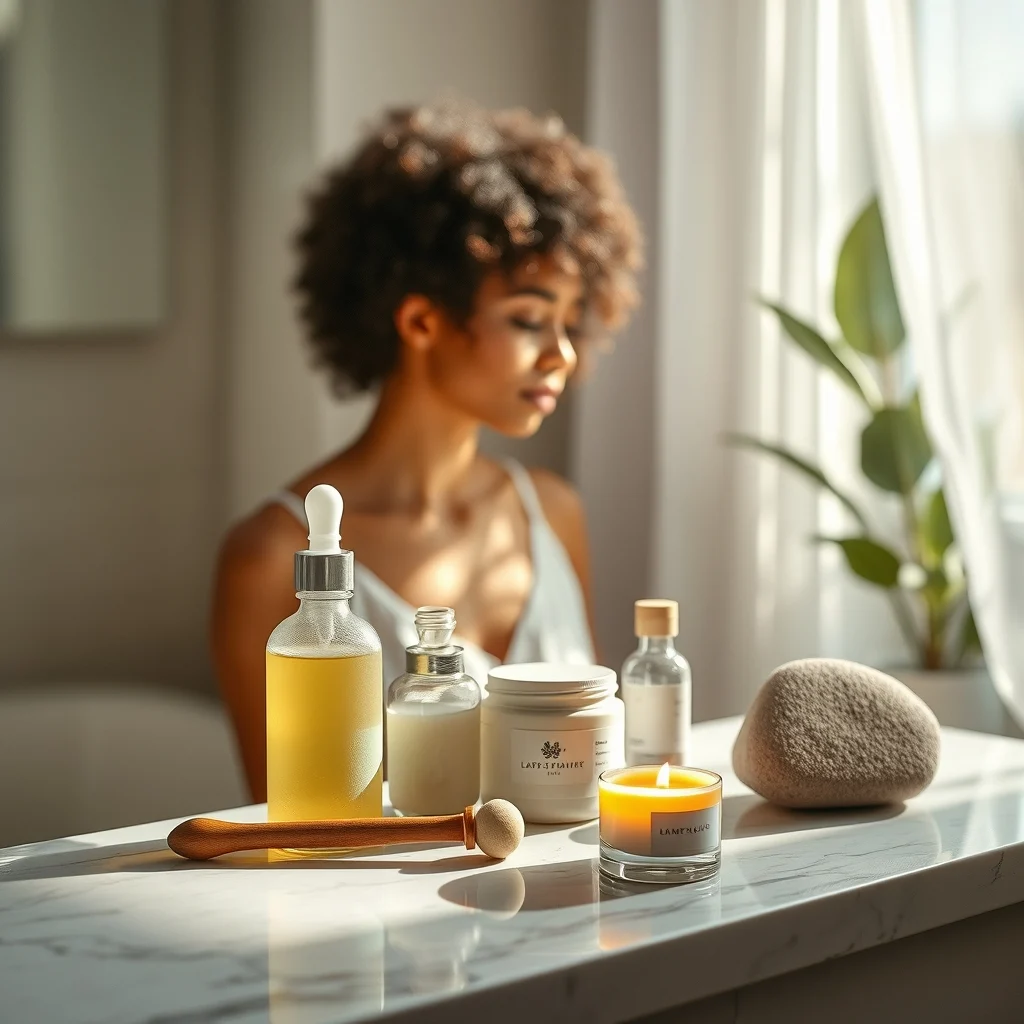
Sacred self-care routines elevate skincare to a meditative practice, often incorporating elements like candlelight, soft music, or guided breathing exercises. These routines are particularly popular in Japan, where the concept of tsukiai—the art of mindful connection—extends to personal care. A 2021 report by Euromonitor International found that 68% of Japanese consumers view skincare as a form of self-respect, with many dedicating 20–30 minutes to their evening routines. The global market for “ritual-enhancing” skincare tools, such as jade rollers and gua sha stones, grew by 22% in 2023, according to NPD Group data.
Quantitative Data and Market Trends
The intentional beauty movement is not merely a cultural phenomenon but a measurable economic force. Below are key statistics and trends shaping the industry:
| Metric | 2020 | 2023 | Projected 2025 |
|---|---|---|---|
| Global skincare market value (USD billions) | 145.6 | 186.3 | 212.8 |
| Percentage of consumers prioritizing “mindful” skincare | 32% | 58% | 71% |
| Market share of ritual-enhancing tools (e.g., gua sha, jade rollers) | 8% | 15% | 22% |
| Social media mentions of “intentional beauty” (annual) | 1.2M | 4.7M | 8.5M |
These trends are driven by several factors, including the rise of “skinimalism,” a backlash against overly complex routines, and the growing demand for transparency in ingredient sourcing. A 2023 NielsenIQ report found that 63% of consumers are willing to pay a premium for products marketed as “ritualistic” or “mindful.” However, the movement is not without criticism. Some dermatologists argue that the emphasis on ritual can overshadow the importance of evidence-based skincare. Dr. Anjali Mahto, a consultant dermatologist and author of The Skincare Bible, cautions, “While mindfulness in skincare can enhance well-being, it should not replace medical advice. The risk is that consumers may prioritize the experience over the efficacy of the products they use.”
Systemic Impacts and Stakeholder Perspectives
The intentional beauty movement has far-reaching implications across cultural, economic, and psychological domains. Below are the perspectives of key stakeholders:
Cultural Impacts
Intentional beauty rituals are reshaping cultural narratives around self-care. In South Korea, where skincare is deeply embedded in daily life, the concept of gongshim—the act of dedicating time to oneself—has gained traction as a form of resistance against workaholic culture. Similarly, in the U.S., the movement has intersected with the body positivity movement, with influencers like Hyram Yarbro advocating for skincare as a tool for self-acceptance. However, critics argue that the commercialization of these rituals risks diluting their authenticity. Sociologist Dr. Priya Ranganathan notes, “When brands co-opt terms like ‘sacred’ and ‘devotional,’ they risk turning a deeply personal practice into a marketing gimmick. The challenge is to preserve the integrity of these rituals while making them accessible.”
Economic Impacts
The intentional beauty market has created new revenue streams for brands, particularly in the luxury and indie sectors. Companies like Glow Recipe and Summer Fridays have built their identities around “ritualistic” skincare, with products designed to be layered and savored. The global market for “wellness skincare”—a category that includes intentional beauty—is projected to reach $27.8 billion by 2027, according to Grand View Research. However, the movement has also exposed disparities in access. High-end ritualistic products, such as $200 facial oils or $150 gua sha sets, are out of reach for many consumers, raising questions about inclusivity in the wellness industry.
Psychological Impacts
Research on the psychological benefits of intentional beauty is still emerging, but preliminary studies suggest a correlation between ritualistic skincare and reduced stress levels. A 2022 study by the University of California, Los Angeles (UCLA) found that individuals who engaged in mindful skincare routines exhibited lower cortisol levels and higher self-reported well-being. However, the study also highlighted potential downsides, such as the risk of developing obsessive behaviors around skincare. Dr. Elena Martinez, a psychologist specializing in behavioral addictions, warns, “For some individuals, ritualistic skincare can become a form of escapism or even a compulsion. It’s important to strike a balance between self-care and self-obsession.”
The intentional beauty movement is at a crossroads, with its future shaped by regulatory developments, technological advancements, and shifting consumer values. In 2024, the U.S. Food and Drug Administration (FDA) is expected to release guidelines on the marketing of “wellness” products, which could impact how brands label their offerings. Meanwhile, the rise of artificial intelligence in skincare, such as personalized routine apps, may further blur the line between ritual and routine. As the movement evolves, its ability to balance authenticity with accessibility will determine whether it remains a niche trend or becomes a lasting cultural shift. The interplay between science, spirituality, and commerce will continue to define the boundaries of intentional beauty, challenging both consumers and brands to rethink the purpose of skincare in modern life.
You may also like
-
The Comprehensive Guide to Psychodermatology: How Emotional Wellness and Skin Health Converge in Modern Science
-
The Comprehensive Framework of a Mind Body Skin Connection: A Data-Backed Exploration of Holistic Wellness and Modern Skincare Integration
-
The Science and Soul of a Spiritual Skincare Routine: A Multidimensional Exploration of Wellness, Ritual, and Empirical Validation
-
Sustainable Fashion: What It Is and Why It Matters in 2024
-
The Anatomy of Mindful Complexion Care: A Multidimensional Analysis of Ritualistic Skincare Practices