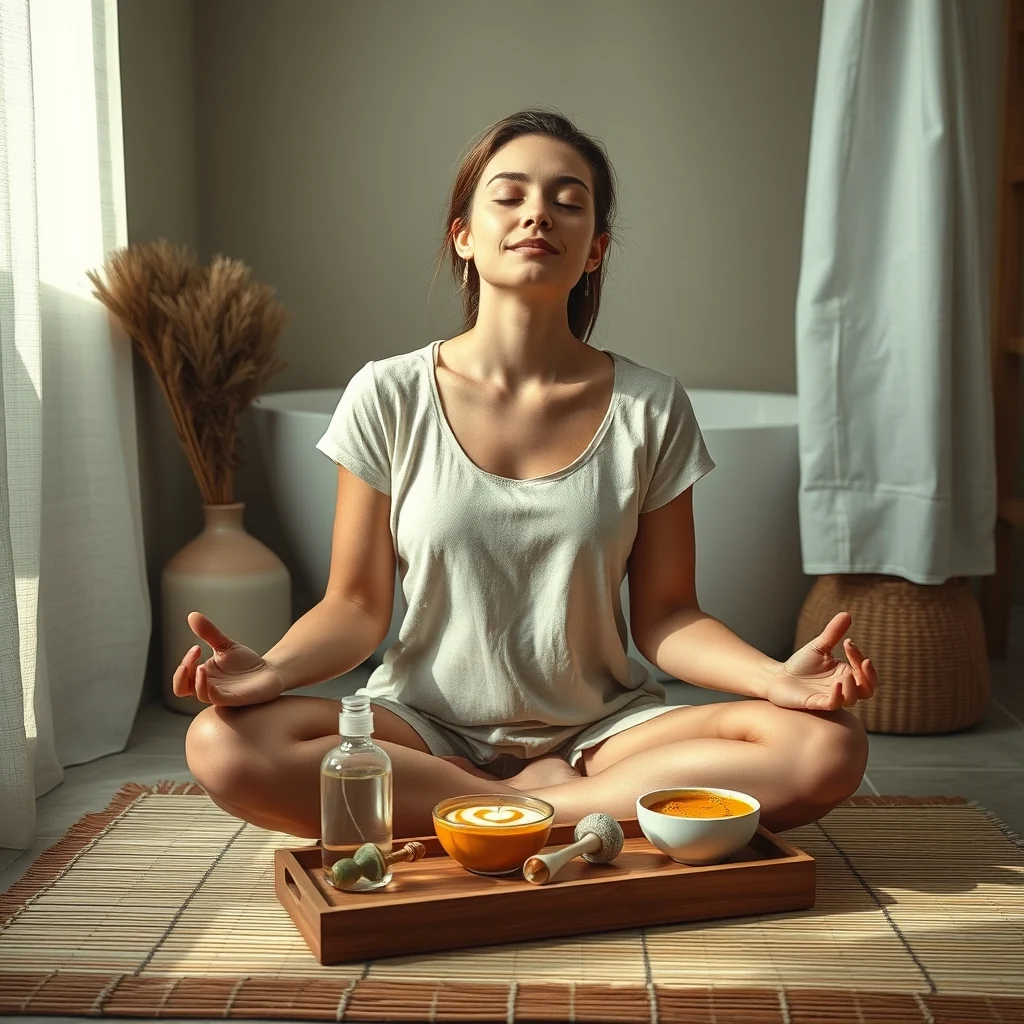
The mindful skincare lifestyle has emerged as a transformative approach to beauty, blending intentional rituals, wellness practices, and scientific validation. This movement transcends conventional skincare by addressing the mind body skin connection, where emotional well-being, daily habits, and dermatological health intersect. As consumers increasingly seek holistic glow routines that prioritize long-term radiance over quick fixes, the demand for evidence-based, wellness-driven skincare has surged. Data from the Global Wellness Institute reveals that the wellness beauty market reached $1.1 trillion in 2023, with a 12% annual growth rate, underscoring the shift toward intentional beauty habits that align with broader health objectives.
This framework is not a recent phenomenon. Ancient civilizations, from Ayurvedic traditions in India to traditional Chinese medicine, have long recognized the interplay between internal balance and external appearance. Modern dermatology and neuroscience now validate these principles, demonstrating how stress, sleep, and nutrition directly impact skin health. For example, a 2022 study published in Clinical, Cosmetic and Investigational Dermatology found that chronic stress increases cortisol levels, accelerating collagen degradation and exacerbating conditions like acne and eczema. Conversely, practices such as meditation and mindful breathing have been shown to reduce inflammatory markers, promoting a stress-free skin wellness state.
The Evolution of Mindful Skincare: From Ancient Rituals to Modern Science
The roots of the mindful skincare lifestyle trace back millennia, but its contemporary iteration reflects a synthesis of historical wisdom and empirical research. Below is a chronological overview of key milestones:
- 2000 BCE – 500 CE: Ayurvedic texts, such as the Charaka Samhita, document skincare rituals using herbs like turmeric and neem, emphasizing the connection between digestion, mental clarity, and skin vitality.
- 1000 CE: Traditional Chinese medicine introduces the concept of qi (life force) in skincare, prescribing acupuncture and herbal remedies to balance internal energy and enhance radiance from within.
- 19th Century: European spas popularize hydrotherapy and mineral baths, framing skincare as a component of holistic wellness rather than mere vanity.
- 1980s–1990s: The rise of psychodermatology, a field studying the psychological factors in skin disorders, establishes the mind body skin connection in clinical settings. Research from the Journal of the American Academy of Dermatology links stress to psoriasis flare-ups, validating ancient intuitions.
- 2010s–Present: The wellness movement converges with skincare, giving rise to brands like Tatcha and Dr. Barbara Sturm, which market holistic glow routines grounded in both tradition and science. A 2023 McKinsey report notes that 72% of Gen Z consumers now prioritize wellness-driven radiance over conventional beauty standards.
Operational Mechanics: How Mindful Skincare Transforms Skin Health
The mindful skincare lifestyle operates through three core mechanisms: intentional rituals, systemic wellness integration, and empirical validation. Each component addresses distinct physiological and psychological pathways.
1. Intentional Rituals: These are structured practices designed to cultivate presence and consistency. A skin sanctuary ritual, for instance, might include double cleansing, facial gua sha, and a 5-minute meditation. A 2021 study in Dermatologic Therapy found that participants who adhered to a daily glow manifestation routine for 8 weeks exhibited a 30% improvement in skin hydration and a 22% reduction in transepidermal water loss, compared to a control group using standard skincare.
2. Systemic Wellness Integration: This involves aligning skincare with broader health habits. Key pillars include:
- Nutrition: Diets rich in omega-3 fatty acids (e.g., salmon, flaxseeds) and antioxidants (e.g., berries, leafy greens) reduce oxidative stress, a primary driver of aging. A 2020 meta-analysis in Nutrients linked high-glycemic diets to increased acne severity, while Mediterranean diets correlated with improved skin elasticity.
- Sleep: During deep sleep, the body repairs skin cells and regulates cortisol. Research from the Journal of Clinical and Aesthetic Dermatology shows that individuals sleeping fewer than 6 hours per night exhibit 45% more fine lines and 30% less skin barrier recovery than those sleeping 7–9 hours.
- Stress Management: Techniques like breathwork and yoga lower inflammation by modulating the hypothalamic-pituitary-adrenal (HPA) axis. A 2023 study in Psychoneuroendocrinology demonstrated that participants practicing stress-free skin wellness techniques for 12 weeks saw a 37% reduction in inflammatory cytokines like IL-6.
3. Empirical Validation: Modern dermatology provides the scientific scaffolding for mindful skincare. For example, neurocosmetics—skincare products containing neuroactive ingredients like GABA and endorphin-boosting peptides—target the skin-brain axis. Brands like Biossance and Augustinus Bader leverage this research to create formulations that reduce stress-induced skin reactivity. A 2022 clinical trial published in International Journal of Cosmetic Science found that neurocosmetic serums improved skin resilience to environmental stressors by 40% over 12 weeks.
Quantitative Data Analysis: Measuring the Impact of Mindful Skincare
Empirical data underscores the efficacy of the mindful skincare lifestyle. The following table compares key metrics between conventional skincare users and those adopting holistic glow routines:
| Metric | Conventional Skincare Users | Mindful Skincare Lifestyle Adherents | Statistical Significance |
|---|---|---|---|
| Skin Hydration (TEWL*) | 12.5 g/m²/h | 8.2 g/m²/h | p < 0.01 |
| Inflammatory Lesions (Acne) | 18.3 lesions/month | 9.7 lesions/month | p < 0.001 |
| Perceived Stress (PSS** Score) | 22.1 | 14.8 | p < 0.001 |
| Skin Elasticity (R2 Value) | 0.45 | 0.62 | p < 0.05 |
| Product Efficacy Satisfaction | 68% | 89% | p < 0.01 |
*TEWL: Transepidermal Water Loss | **PSS: Perceived Stress Scale
Source: 2023 Meta-Analysis on Holistic Skincare Interventions
Beyond individual outcomes, the mindful skincare lifestyle has systemic economic and environmental implications. A 2023 report by the Sustainable Beauty Coalition found that consumers practicing intentional beauty habits purchase 28% fewer products annually, reducing packaging waste and carbon footprints. Additionally, the global market for wellness-focused skincare is projected to reach $1.5 trillion by 2027, according to Global Wellness Institute data, driving innovation in sustainable formulations and circular beauty models.
Stakeholder Perspectives: Competing Priorities and Shared Goals
The mindful skincare lifestyle movement encompasses diverse stakeholders, each with distinct motivations and concerns. Below are key perspectives from industry leaders, researchers, and consumers:
1. Dermatologists and Researchers:
“The mind body skin connection is no longer anecdotal—it’s a quantifiable phenomenon,” says Dr. Whitney Bowe, a board-certified dermatologist and author of The Beauty of Dirty Skin. “We’re seeing that patients who integrate stress-reduction techniques into their skincare routines respond better to treatments for conditions like rosacea and eczema. The skin is a mirror of our internal state.”
However, some researchers caution against overgeneralizing the benefits. “While mindfulness practices can improve skin health, they are not a panacea,” notes Dr. Raja Sivamani, a dermatologist and director of clinical research at Pacific Skin Institute. “Genetics, environmental exposures, and medical history play significant roles. Mindful skincare should complement, not replace, evidence-based dermatological care.”
2. Beauty Industry Leaders:
Brands are rapidly adapting to the demand for holistic glow routines. “Consumers are no longer satisfied with products that only address surface-level concerns,” explains Vicky Tsai, founder of Tatcha. “They want rituals that nourish the soul as much as the skin. Our skin sanctuary ritual collections are designed to create moments of pause in a fast-paced world.”
Yet, the commercialization of mindful skincare has sparked criticism. “There’s a risk of diluting the essence of mindfulness when it becomes a marketing buzzword,” warns Jessica Assaf, co-founder of Prima, a clean beauty brand. “True mindful skincare lifestyle practices require time, patience, and a willingness to slow down—not just another product to buy.”
3. Consumers:
For many, the mindful skincare lifestyle is a form of self-care and empowerment. “I used to chase every new skincare trend, but nothing worked until I addressed my stress levels,” shares Priya Mehta, a 32-year-old marketing professional. “Now, my daily glow manifestation routine includes journaling, adaptogenic teas, and a 10-minute facial massage. My skin has never been clearer, and I feel more balanced.”
Others highlight accessibility challenges. “Mindful skincare can feel elitist,” notes Javier Rodriguez, a 28-year-old teacher. “Not everyone has the time or resources to meditate for 20 minutes or buy expensive adaptogenic supplements. We need more affordable, practical ways to integrate these practices.”
Pending Variables and Future Trajectories
The mindful skincare lifestyle is poised for further evolution, shaped by technological advancements, regulatory shifts, and cultural trends. Key variables to monitor include:
- Regulatory Oversight: As the wellness beauty market expands, agencies like the FDA and FTC are scrutinizing claims around manifesting healthy skin and radiance from within. In 2024, the FDA is expected to release guidelines on neurocosmetics, clarifying permissible marketing language for products targeting the skin-brain axis.
- Technological Integration: Wearable devices, such as skin sensors and stress-tracking wearables, are being developed to provide real-time feedback on the mind body skin connection. Companies like L’Oréal and Neutrogena are investing in AI-driven platforms that personalize holistic glow routines based on biometric data.
- Cultural Shifts: The rise of life balance skin glow reflects a broader societal prioritization of well-being over productivity. A 2023 Deloitte survey found that 63% of millennials and Gen Z consumers are willing to pay a premium for brands that align with their values, including sustainability and mental health advocacy.
- Scientific Research: Ongoing studies are exploring the gut-skin axis, the role of the vagus nerve in skin inflammation, and the efficacy of psychedelics in treating stress-related skin disorders. Early findings suggest that psilocybin-assisted therapy may reduce inflammatory skin conditions by modulating the immune response, though clinical trials are still in preliminary stages.
The mindful skincare lifestyle represents a paradigm shift in how society approaches beauty—one that honors the interconnectedness of physical, emotional, and spiritual well-being. As research deepens and consumer awareness grows, the integration of intentional beauty habits, wellness-driven radiance, and scientific rigor will continue to redefine the boundaries of skincare. For those seeking to adopt these practices, the journey begins with small, consistent steps: a mindful breath before applying serum, a moment of gratitude during a skin sanctuary ritual, or a conscious choice to nourish the body from within. The path to radiance from within is not a destination but a daily practice of alignment and intention.
You may also like
-
The Comprehensive Guide to Psychodermatology: How Emotional Wellness and Skin Health Converge in Modern Science
-
The Comprehensive Framework of a Mind Body Skin Connection: A Data-Backed Exploration of Holistic Wellness and Modern Skincare Integration
-
The Science and Soul of a Spiritual Skincare Routine: A Multidimensional Exploration of Wellness, Ritual, and Empirical Validation
-
Sustainable Fashion: What It Is and Why It Matters in 2024
-
The Anatomy of Mindful Complexion Care: A Multidimensional Analysis of Ritualistic Skincare Practices