Intentional beauty rituals, encompassing practices such as mindful product application, skincare affirmation rituals, and devotional daily glow routines, have emerged as a significant trend in contemporary wellness and cosmetic industries. These practices, which integrate mindfulness, self-devotion, and intentionality into skincare routines, are adopted by individuals across diverse demographics, from urban millennials to middle-aged professionals seeking holistic well-being. The phenomenon gained traction in the early 2010s, coinciding with the rise of the self-care movement, and has since evolved into a structured, ritualistic approach to personal grooming. These rituals are practiced globally, with notable concentrations in North America, Europe, and East Asia, where cultural emphasis on skincare and mindfulness intersects. The motivations behind these practices are multifaceted: they serve as a form of self-expression, a tool for stress reduction, and a means to cultivate a deeper connection with one’s physical and emotional self. The mechanics of intentional beauty rituals vary, but they typically involve deliberate, slow-paced application of products, often accompanied by affirmations, meditation, or breathwork.
The scope of intentional beauty rituals extends beyond individual well-being, influencing broader cultural, economic, and social dynamics. Historically, skincare has been viewed as a functional necessity, but the integration of ritualistic elements reflects a shift toward viewing beauty as a form of self-devotion. This evolution can be traced back to ancient practices, such as Ayurvedic skincare in India or the Japanese concept of tsukuri (craftsmanship), which emphasized the spiritual and emotional dimensions of personal care. Primary stakeholders in this space include consumers, skincare brands, wellness influencers, psychologists, and dermatologists. Consumers seek these rituals for their therapeutic benefits, while brands leverage the trend to market products as tools for mindfulness and self-care. Psychologists and dermatologists, meanwhile, study the psychological and physiological impacts of these practices, contributing to a growing body of research on the intersection of beauty and mental health.
Chronological Evolution of Intentional Beauty Rituals
The roots of intentional beauty rituals can be traced to ancient civilizations, where skincare was intertwined with spiritual and healing practices. In ancient Egypt, for instance, beauty rituals were not merely cosmetic but were believed to honor the gods and promote physical and spiritual purity. The use of oils, herbs, and minerals in skincare was accompanied by prayers and offerings, reflecting a holistic approach to beauty. Similarly, in traditional Chinese medicine, skincare was viewed as an extension of overall health, with practices designed to balance the body’s qi (energy).
The modern iteration of intentional beauty rituals began to take shape in the late 20th century, as the wellness movement gained momentum. The 1990s saw the rise of aromatherapy and holistic skincare, with brands like Aveda and The Body Shop promoting products that emphasized natural ingredients and ethical sourcing. However, it was the advent of social media in the 2010s that propelled intentional beauty rituals into the mainstream. Platforms like Instagram and YouTube became hubs for wellness influencers, who shared tutorials on mindful skincare routines, often framing them as acts of self-love and devotion. By 2015, the term “self-care” had entered the cultural lexicon, and skincare brands began to market their products not just for their functional benefits but as tools for emotional and spiritual well-being.
A key milestone in the evolution of intentional beauty rituals was the launch of brands like Tatcha and Glow Recipe, which explicitly positioned their products within a narrative of mindfulness and ritual. Tatcha, for example, draws inspiration from Japanese beauty rituals, emphasizing the use of time-honored ingredients like rice bran and green tea in a deliberate, meditative application process. Similarly, Glow Recipe’s marketing campaigns often feature language around “skin devotion” and “intentional nourishment,” appealing to consumers seeking a deeper connection with their skincare routines.
Operational Mechanics of Intentional Beauty Rituals
Intentional beauty rituals are characterized by their structured, deliberate approach to skincare. Unlike conventional routines, which may prioritize speed and efficiency, these practices emphasize presence, mindfulness, and emotional engagement. A typical ritual might begin with a moment of centering, such as deep breathing or a brief meditation, to transition the mind into a state of focus. This is followed by the application of products in a slow, methodical manner, often accompanied by affirmations or positive intentions. For example, a user might apply a serum while repeating a mantra like, “I nourish my skin with love and care,” reinforcing the emotional connection to the act.
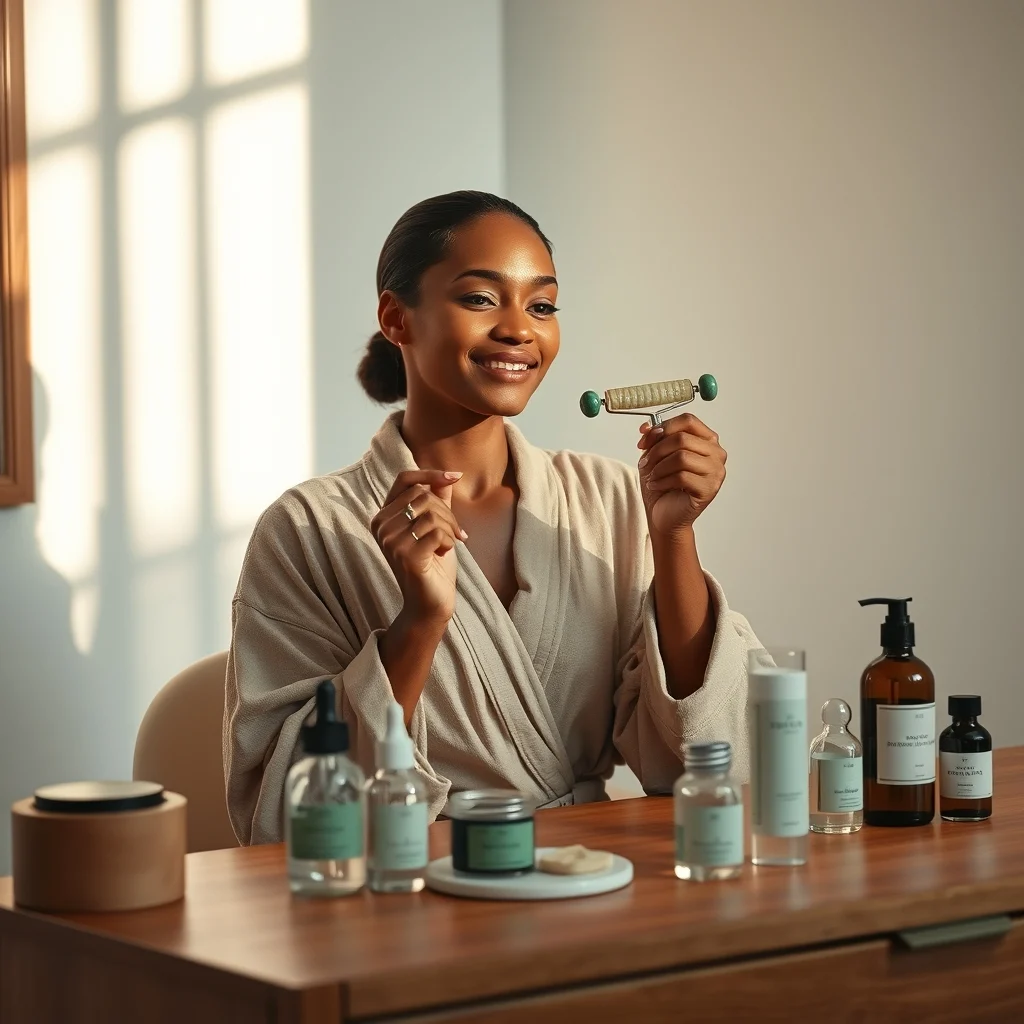
The products used in these rituals are often selected for their sensory qualities, such as texture, scent, and temperature, which enhance the overall experience. Brands like Fresh and Drunk Elephant have capitalized on this trend by designing products with rich, luxurious textures and aromas that engage multiple senses. The ritual may also incorporate tools like jade rollers or gua sha stones, which are used not only for their physical benefits but also for their symbolic significance. In traditional Chinese medicine, for instance, gua sha is believed to promote the flow of qi, while jade rollers are associated with cooling and calming properties.
Dr. Sarah Villafranco, a dermatologist and founder of Osmia Organics, explains the appeal of these rituals: “When people slow down and engage with their skincare in a mindful way, they’re not just applying products—they’re creating a moment of pause in their day. This can have a profound impact on stress levels and overall well-being. The skin is the body’s largest organ, and how we care for it can reflect how we care for ourselves.”
Quantitative Data and Market Trends
The rise of intentional beauty rituals has been accompanied by significant growth in the skincare and wellness industries. According to a 2023 report by McKinsey & Company, the global wellness market is valued at over $1.5 trillion, with skincare accounting for a substantial portion of this figure. Within the skincare sector, products marketed as “ritualistic” or “mindful” have seen a 40% increase in sales since 2020, outpacing the growth of conventional skincare products. A survey conducted by the Global Wellness Institute in 2022 found that 68% of consumers in North America and Europe consider mindfulness an important factor in their skincare choices, up from 45% in 2018.
The following table highlights key statistics related to the intentional beauty ritual market:
| Metric | 2018 | 2020 | 2022 | 2023 (Projected) |
|---|---|---|---|---|
| Global skincare market value (USD billion) | 134 | 145 | 160 | 175 |
| Percentage of consumers prioritizing mindfulness in skincare | 45% | 55% | 68% | 72% |
| Sales growth of ritualistic skincare products (YoY) | 12% | 25% | 40% | 35% |
| Number of skincare brands marketing “ritualistic” products | 50 | 120 | 250 | 350 |
Social media has played a pivotal role in driving the popularity of intentional beauty rituals. A 2023 study by Nielsen found that posts tagged with #MindfulSkincare or #SkincareRitual generate 3.5 times more engagement than conventional skincare content. Influencers like Hyram Yarbro and James Welsh have amassed millions of followers by promoting skincare routines that emphasize intentionality and self-care. The study also revealed that 70% of consumers who engage with intentional beauty content report feeling more connected to their skincare routines, while 60% say these practices have improved their mental well-being.
Systemic Impacts and Sociocultural Dimensions
The adoption of intentional beauty rituals has had far-reaching impacts on cultural perceptions of beauty, self-care, and consumer behavior. One of the most significant shifts has been the redefinition of beauty as an internal, holistic experience rather than an external, aesthetic pursuit. This paradigm shift has challenged traditional beauty standards, which often prioritize youth and perfection, and has instead promoted a more inclusive, self-accepting approach to personal care. Dr. Anjali Mahto, a consultant dermatologist and author of The Skincare Bible, notes, “The beauty industry has long been criticized for promoting unrealistic standards, but intentional beauty rituals are helping to shift the narrative. When people focus on how their skincare makes them feel rather than how it makes them look, it fosters a healthier relationship with their appearance.”
Economically, the trend has spurred innovation in product development and marketing. Brands are increasingly collaborating with psychologists, wellness coaches, and spiritual leaders to design products and routines that align with the principles of mindfulness and self-devotion. For example, the brand Fable & Mane, which draws inspiration from Ayurvedic traditions, partners with practitioners of traditional Indian medicine to create products that are both effective and spiritually resonant. This approach has resonated with consumers, particularly those from multicultural backgrounds who seek to reconnect with their heritage through beauty practices.
However, the commercialization of intentional beauty rituals has also sparked criticism. Some argue that the trend has been co-opted by brands seeking to capitalize on the wellness movement, often at the expense of authenticity. Dr. Jennifer Baumgartner, a clinical psychologist and author of You Are What You Wear, cautions, “While the intentions behind these rituals are often genuine, there’s a risk of them becoming just another consumerist trend. When brands market self-care as something you can buy, it undermines the true purpose of these practices, which is to cultivate a deeper connection with oneself.”
Socially, intentional beauty rituals have also influenced workplace dynamics and mental health discourse. Companies like Google and L’Oréal have introduced mindfulness-based skincare workshops for employees, recognizing the role these practices can play in reducing stress and improving productivity. A 2022 study by the American Psychological Association found that employees who engaged in mindful skincare routines reported a 20% reduction in workplace stress and a 15% increase in job satisfaction. This has led to a growing recognition of beauty rituals as a legitimate form of self-care, rather than a frivolous indulgence.
Stakeholder Perspectives and Competing Narratives
The intentional beauty ritual movement is shaped by a diverse array of stakeholders, each with distinct perspectives on its benefits and challenges. Consumers, particularly those in the 25-40 age demographic, are the primary drivers of the trend, drawn to the emotional and psychological benefits of these practices. For many, intentional beauty rituals serve as a form of daily meditation, offering a moment of respite in an increasingly fast-paced world. A 2023 survey by the Pew Research Center found that 58% of millennials and Gen Z consumers view skincare as a form of self-care, compared to 35% of Gen X and 22% of Baby Boomers.
Skincare brands, meanwhile, have embraced the trend as an opportunity to differentiate themselves in a crowded market. Companies like Tata Harper and Augustinus Bader have built their identities around the concept of “slow beauty,” emphasizing the importance of quality, sustainability, and intentionality. However, not all brands have adopted this approach authentically. Some critics argue that the trend has led to “wellness washing,” where brands use mindfulness and self-care as marketing buzzwords without substantively changing their products or practices. “It’s easy for brands to slap the word ‘ritual’ on a product and call it a day,” says Jessica DeFino, a beauty journalist and critic. “But true intentionality requires more than just marketing—it requires a commitment to transparency, sustainability, and ethical sourcing.”
Dermatologists and psychologists offer a more nuanced perspective on the trend. While many acknowledge the mental health benefits of intentional beauty rituals, they also caution against overstating their physical effects. Dr. Dray, a board-certified dermatologist and YouTube educator, explains, “There’s no doubt that taking time for yourself can reduce stress, and lower stress levels can improve skin conditions like acne and eczema. However, it’s important to remember that no amount of mindfulness can replace evidence-based skincare ingredients like retinoids or sunscreen. The ritual should complement, not replace, a solid skincare regimen.”
Wellness influencers, who play a pivotal role in shaping consumer behavior, often straddle the line between advocacy and commercialization. While some influencers, like @SkinCarebyHyram, focus on educating their audiences about the science of skincare, others prioritize aesthetics and brand partnerships. This has led to concerns about misinformation and the commodification of self-care. “The influencer space is incredibly powerful, but it’s also unregulated,” says Dr. Baumgartner. “When influencers promote products without disclosing their partnerships or the limitations of these rituals, it can create unrealistic expectations and even harm consumers.”
The future of intentional beauty rituals will likely be shaped by ongoing debates about authenticity, accessibility, and inclusivity. As the trend continues to evolve, stakeholders will need to address questions about who these rituals are designed for and whether they can be adapted to serve diverse populations. For instance, individuals with disabilities or chronic illnesses may face barriers to participating in traditional beauty rituals, highlighting the need for more inclusive approaches. Additionally, the environmental impact of the skincare industry—particularly the use of single-use packaging and non-recyclable materials—remains a pressing concern. Brands that prioritize sustainability and ethical sourcing will be better positioned to align with the values of mindful consumers. Upcoming regulatory milestones, such as the European Union’s ban on greenwashing in advertising, may also influence how intentional beauty rituals are marketed and perceived. As the conversation around beauty and wellness continues to expand, the challenge will be to preserve the integrity of these practices while ensuring they remain accessible, sustainable, and grounded in both science and self-devotion.
You may also like
-
The Comprehensive Guide to Psychodermatology: How Emotional Wellness and Skin Health Converge in Modern Science
-
The Comprehensive Framework of a Mind Body Skin Connection: A Data-Backed Exploration of Holistic Wellness and Modern Skincare Integration
-
The Science and Soul of a Spiritual Skincare Routine: A Multidimensional Exploration of Wellness, Ritual, and Empirical Validation
-
Sustainable Fashion: What It Is and Why It Matters in 2024
-
The Anatomy of Mindful Complexion Care: A Multidimensional Analysis of Ritualistic Skincare Practices